When Vidya, a young mathematics teacher from Delhi, receives an unexpected marriage proposal from Raja Rajendra Singh of Weir, she leaves behind everything she has ever known for the fading grandeur of an ancient Rajput haveli. But behind its regal façade lies a family haunted by loss, bound by silence, and guarding secrets that were never meant to be uncovered.As Vidya begins her new life as the new queen of Weir, she finds herself drawn into a mystery that reaches far beyond the walls of the haveli. A forgotten wing remains locked, whispers linger in deserted corridors, and every answer seems to unravel another question. The deeper she ventures into Weir’s past, the more she realises that the greatest danger lies not in what has been hidden, but in why it was hidden in the first place.Set against the twilight of India’s princely era, The Palace of Echoes is a haunting historical mystery woven with love, betrayal, and long-buried truths. It is a story of forgotten lives, impossible choices, and secrets that echo across generations, where every locked door promises a revelation and the past refuses to remain buried.
Vikarn Chowdhary
For as long as he can remember, Vikarn Chowdhary has been captivated by the written word. An avid reader from an early age, he went on to study English and Journalism before beginning his career in media and publishing, where his love of storytelling first took shape.
Having lived in India, the United Kingdom, and now Australia, Vikarn draws on diverse cultures, histories, and experiences to shape his fiction. Fascinated by forgotten histories, family legacies, and the complexities of human relationships, he writes stories that blend mystery with emotional depth and transport readers to another time and place.
His debut novel was Into the White Mist. The Palace of Echoes is his second novel. He lives in Sydney with his wife and two children and works in business strategy at an international law firm. When he isn’t writing, he is usually reading, researching, or searching for the next story waiting to be told.
Editorial Reviews
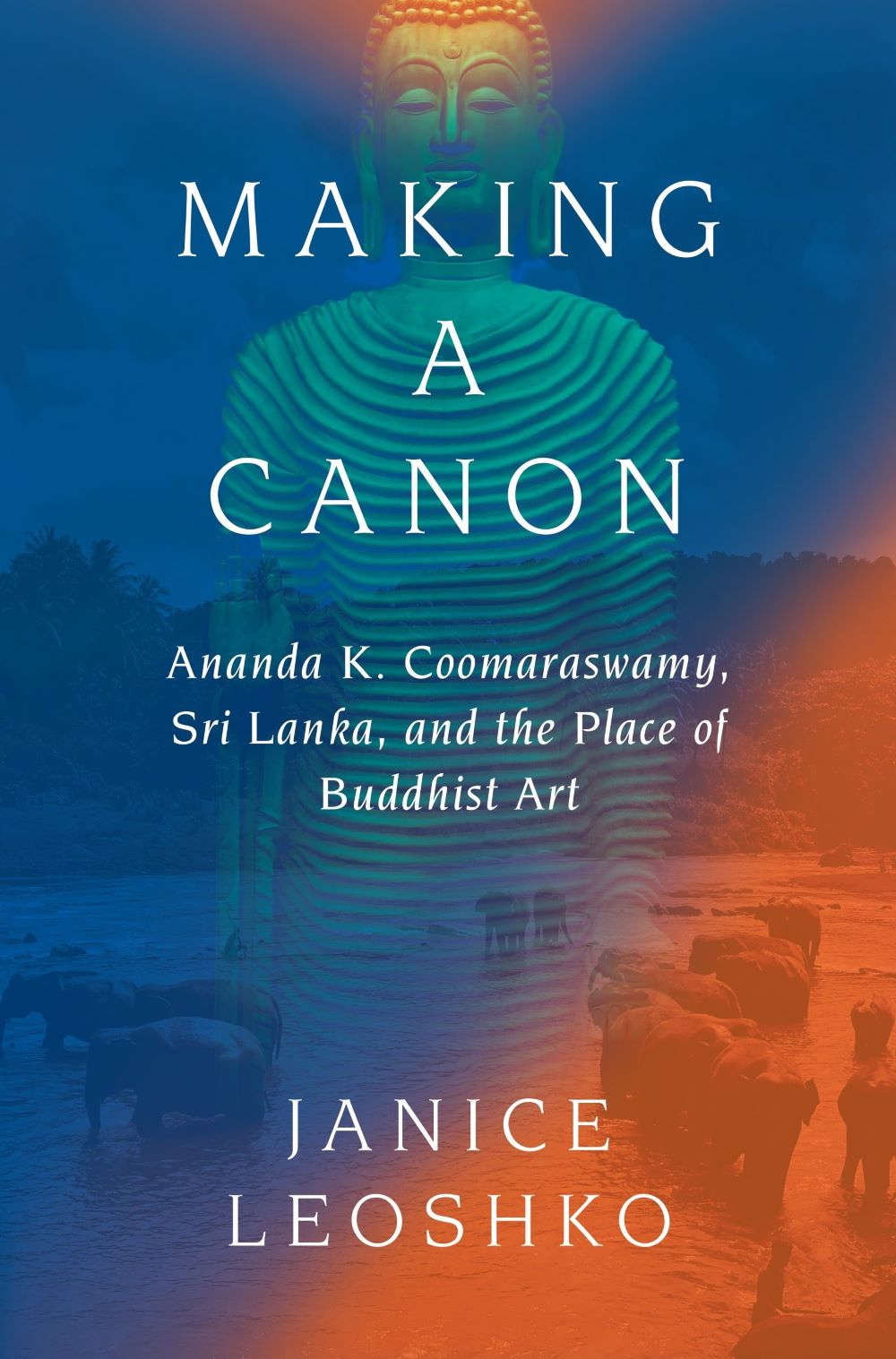
 | “Coomaraswamy (1877–1947) was more than a scholar—he was a cosmopolitan cultural bridge, a provocateur, and part of Boston and New York’s avant-garde intellectual scene. . . . [Leoshko] masterfully unveils his complex legacy, from uncovering ruins in Sri Lanka to curating at Boston’s Museum of Fine Arts.”
—Tricycle
|
| “Recognizing how history is an unraveling as much as a construction, Leoshko disentangles the life and intellectual times of the influential yet enigmatic Coomaraswamy, showing how his cosmopolitanism was formative for the emerging discipline of international Buddhist art history. Making a Canon is sensitive, informative, balanced, and self-confident—mercifully free of professional jargon and polemic—and, in its own right, an innovative and insightful contribution to the ‘canon’ of Buddhist art history.”
—Peter Skilling, Chulalongkorn University, Bangkok
|
| “Much ink has been spilled over the art philosopher Ananda Coomaraswamy’s precise legacy. By delving into the roots of his intellectual formation in Sri Lanka, Leoshko compels us to revise many of our commonly held assumptions about the savant. This refreshingly original work is a must-read for all students of ancient Indian art.”
—Partha Mitter, University of Sussex
|
| “With her usual sweeping thoroughness and unprecedented angles of approach, Leoshko discerns the origins of Coomaraswamy’s most influential ideas about Buddhism, South Asia, art, and religion in his first career as a geologist for the British Empire in Sri Lanka. Leoshko turns her forensic eye for pattern on new archival data. Her intellectual history of a visual thinker, told in accessible language, balances respect for his profound legacy with insight into his shortcomings.”
—Padma Kaimal, Colgate University
|
| “We have long needed more biographical studies of influential individuals who were not only entangled in the ‘Orientalist’ enterprise but who also shaped it. Undoubtedly, one such figurehead in Buddhist art is Ananda Kentish Coomaraswamy. Leoshko has now delivered an in-depth and critical study of Coomaraswamy’s scholarly activities in the broad context of contemporary and present academic discourse—a must-read for anybody interested in things South Asian.”
—Max Deeg, Cardiff University
|
Books of related interest